Unleashing Your Creative Lettering Style
Look around you. The world is saturated with typography. From the coffee cup in your hand to the billboard you pass on the commute, letters aren’t just functional; they are emotional cues. We often rely on premium font libraries to do the heavy lifting, but there is a distinct magic in hand-drawn work. Creative Lettering: Finding Your Style isn't just about learning to draw pretty shapes; it is about discovering a visual voice that resonates with your specific audience. Whether you are a designer looking to add design assets to your toolkit or a small business owner trying to define a brand identity, understanding how to manipulate letterforms is a superpower.
More Than Just a Font: The Anatomy of Style
When we talk about Creative Lettering: Finding Your Style, we are discussing the transition from static typography to dynamic illustration. Unlike a standard sans serif font or serif font installed on your computer, creative lettering implies a human touch. It carries the weight of the pen stroke, the speed of the hand, and the imperfections that make a design feel authentic.
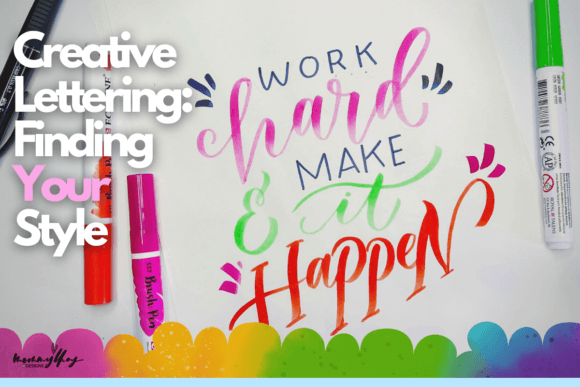
The visual characteristics of this approach often blend elements of a script font with the structure of a display font. You might see thick, brush-like strokes contrasted with fine, hairline details. This style is inherently expressive. It can feel whimsical and organic, or it can be sharp and aggressive, depending on the tools used and the personality you are trying to project. It is the difference between a "font" and a "lettering piece." One is a tool; the other is a composition designed specifically for its context.
Strategic Applications: Where Personality Meets Purpose
Finding your lettering style is only half the battle; knowing where to deploy it is the other half. This isn't about replacing every sans serif font on your website with cursive. It is about strategic placement to maximize impact.
In logo design, a custom lettering style is often the ultimate differentiator. It ensures that your mark is truly one-of-a-kind. For packaging design, a handwritten font or custom lettering can evoke a sense of artisanal quality and care, suggesting that a real human crafted the product inside. In the realm of editorial design, such as book covers or magazine spreads, a display font style created through lettering can set the tone for the entire narrative before a single word of the body copy is read.
Furthermore, the digital space craves this human element. Social media graphics often feel sterile when set in standard system fonts. Introducing creative lettering can stop the scroll, creating a focal point that feels personal and engaging. It works exceptionally well for quotes, headers, and call-to-action buttons where you need to grab attention immediately.
The Psychology of the Stroke
Your choice in lettering style directly influences brand perception. A flowing, connected script font style suggests elegance, tradition, or femininity. A blocky, textured brush style might convey energy, rebellion, or masculinity. By mastering Creative Lettering: Finding Your Style, you gain control over these psychological triggers. You move from simply "communicating" to "connecting."
Practical Guidance for Designers and Creators
So, how do you actually find this style? It starts with experimentation. Don't just stick to one tool. Try broad-nib markers, fine-liners, and brushes. Each tool forces your hand into different movements, creating unique textures that can become the foundation of your signature look.
When evaluating if this approach fits your project, consider the following practical steps:
- Evaluate Readability: While style is important, function is king. Ensure your lettering doesn't sacrifice legibility for flair. Test it at small sizes to ensure it holds up as a web design element or on mobile screens.
- Test Font Pairings: Rarely does creative lettering stand alone in long-form content. It needs a partner. Pair your expressive headers with a clean, geometric sans serif font for body text. This contrast creates a professional visual hierarchy that guides the reader's eye.
- Review Commercial Licensing: If you are using a commercial font that mimics hand lettering, or if you are scanning your own work to sell as design assets, you must understand the licensing. Ensure you have the rights for commercial use, especially for logo design or merchandise.
Consistency is also vital. Once you find a style that works for your brand, you need to be able to replicate it. This is where scanning your sketches and vectorizing them in software like Illustrator comes in handy. It allows you to refine your modern typography while keeping the organic essence of the original sketch.
Building a Visual Language
Ultimately, Creative Lettering: Finding Your Style is about building a cohesive visual language. It’s about looking at a handwritten font or a custom sketch and knowing exactly what emotion it triggers. It bridges the gap between the cold precision of digital typesetting and the warmth of human expression.
For the entrepreneur or content creator, this skill is invaluable. It allows you to create social media graphics that feel authentic, packaging that tells a story, and a brand identity that feels lived-in. Don't be afraid to make mistakes. The most interesting lettering styles often come from "happy accidents"—a smudge here, a thick stroke there. Embrace the imperfection. In a world of perfect vectors, a little bit of humanity goes a long way.