Sparkle and Strategy: Using Alphabet, Letter, Font Rhinestone Design
When you are building a brand or crafting a product, the texture of your typography matters just as much as the message itself. While clean sans serif fonts are the workhorses of modern typography, there are moments when you need a typeface that does more than just sit quietly on the page. You need a font that catches the light—literally. The Alphabet, Letter, Font Rhinestone Design offers exactly that. It is not merely a set of characters; it is a texture, a statement, and a premium design asset all rolled into one.
The Visual Weight of Glitter and Grit
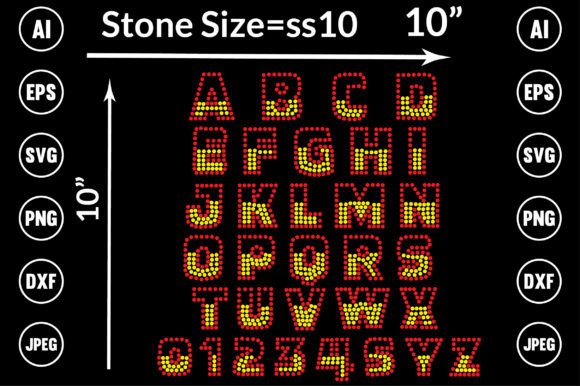
Understanding the visual characteristics of the Alphabet, Letter, Font Rhinestone Design is the first step to using it effectively. At its core, this is a display font that mimics the look of encrusted jewels or textured beading. It possesses a high level of detail, creating a "noisy" silhouette that demands attention. Unlike a standard vector font that relies on smooth curves or sharp edges, this design relies on aggregate shapes to form letters. The personality of this typeface is unapologetically bold, celebratory, and tactile. It bridges the gap between digital design and physical craft, evoking the feeling of a handmade t-shirt or a custom denim jacket.
Because of this heavy visual texture, the Alphabet, Letter, Font Rhinestone Design functions best as a headline act. It is a creative font meant for short bursts of text—titles, monograms, and slogans. If you attempt to write a paragraph with it, you will lose the audience to visual fatigue. The "sparkle" works because it is concentrated; spread it too thin, and the design becomes noise rather than music.
Strategic Applications for Branding and Marketing
For entrepreneurs and small business owners, the decision to use a textured font like this should be strategic. It is not the right fit for a law firm, but it is indispensable for brands that want to project energy, celebration, or luxury retail vibes. Think of the industries where tactile appeal is king: cosmetics, children’s party planning, boutique bakeries, and custom apparel. Using the Alphabet, Letter, Font Rhinestone Design in your logo design or marketing collateral can instantly signal to the audience that your product is special, hand-crafted, and high-value.
In the realm of social media graphics, attention is the currency. A sans serif font might get the information across, but a rhinestone font stops the scroll. It creates a focal point in packaging design that can elevate a simple product to a "gift-worthy" status. For example, a simple "Thank You" printed on a cardboard box using a standard serif font feels functional. The same phrase rendered in the Alphabet, Letter, Font Rhinestone Design transforms the box into a keepsake.
Technical Workflow: From Screen to Sparkle
One of the most practical aspects of this purchase is the versatility of the file formats provided. You are not locked into a single software ecosystem. The inclusion of SVG, DXF, EPS, AI, and PNG files means this design asset is ready for almost any production pipeline you can imagine.
For those in the physical product space, specifically Cricut Explore and Silhouette users, the SVG and DXF files are your best friends. These are vector paths. When you send an SVG file to a cutting machine, the software reads the nodes and paths rather than pixels. This ensures that whether you are cutting heat transfer vinyl (HTV), adhesive vinyl, or stencil material, the cuts are clean and scalable. The design will not pixelate if you resize it from a small mug decal to a large back-of-jacket graphic.
On the digital side, the EPS and AI files allow designers using Adobe Illustrator, Corel Draw, or Inkscape to manipulate the individual paths. You can change the color of the "stones," adjust the kerning, or merge the letters with other shapes to create a unique brand identity mark. The high-resolution PNG and JPEG files (300dpi) are perfect for editorial design, web design mockups, or print-on-demand services where you need a quick, high-quality overlay without dealing with vector paths.
Evaluating Readability and Hierarchy
The biggest challenge with a premium font like the Alphabet, Letter, Font Rhinestone Design is balancing style with readability. Because the texture is complex, legibility can drop at small sizes. As a rule of thumb, this typeface should never be used for body copy. It is strictly a headline or display typeface.
When establishing visual hierarchy, use this font for the primary message only. Pair it with a clean, geometric sans serif font or a simple serif font for any secondary information. For instance, if you are designing a flyer for a grand opening, use the Rhinestone font for "GRAND OPENING" and a clean sans serif for the date, time, and address. This contrast creates a professional look. If you pair it with a script font or a handwritten font, the design might become too chaotic, making it difficult for the viewer to know where to look first.
Practical Tips for Commercial Use
For content creators and publishers, this font serves as a fantastic asset for seasonal campaigns. It is particularly effective for holiday marketing, bridal showers, bachelorette parties, and birthday merchandise. When testing the font for your project, always zoom out. If the text becomes illegible at a distance of three feet (simulating a t-shirt on a rack), you need to increase the size or simplify the message.
Remember that while the file is editable, the "rhinestone" effect is created by the arrangement of the vectors. If you distort the font too much (stretching it vertically, for example), the "stones" may become oblong and unrealistic. Always scale the font proportionally to maintain the integrity of the design. By treating the Alphabet, Letter, Font Rhinestone Design not just as a font but as a specialized piece of art, you can significantly increase the perceived value of your final product.