Mini Font 2: The Embroidery Essential for Personalized Gifts
Why Scale Matters in Machine Embroidery
When it comes to creating high-quality embroidered goods, the difference between an amateur project and a professional heirloom often comes down to the details. While large, dramatic typefaces dominate headlines, the real workhorse for personalized items is often found at the bottom of the size scale. This is where Mini Font 2 proves its worth. It isn't just a smaller version of a standard alphabet; it is a specialized premium font engineered specifically for the constraints of needle and thread. For designers, crafters, and small business owners, understanding how to utilize a tiny font is crucial for expanding product lines and meeting customer demands for customization.
The visual appeal of Mini Font 2 lies in its clarity. In the world of modern typography, legibility at microscopic sizes is a technical achievement. Unlike decorative script fonts or heavy display fonts that turn into a blob of thread when scaled down, this typeface maintains distinct letterforms. It offers a clean, uncluttered aesthetic that respects the texture of the fabric it sits upon. Whether you are working with dense felt or delicate cotton, the design prioritizes readability, ensuring that the message—usually a name or a short monogram—remains the focal point.
Transforming the 1562-Stocking Gift Tag
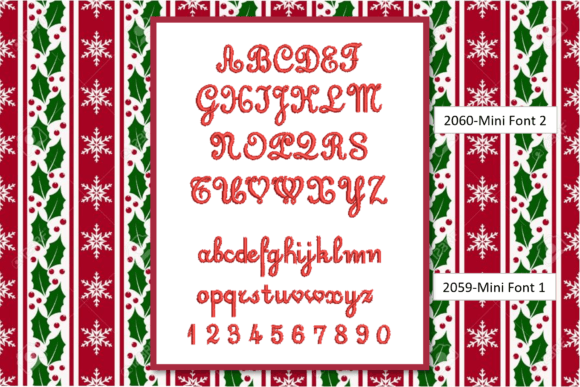
The true test of any creative font is how it performs under pressure, specifically in "In the Hoop" (ITH) projects. Consider the 1562-Stocking Gift Tag. This project is stitched entirely on felt and constructed within the embroidery hoop, requiring precision engineering. The design relies on the 2060-Mini Font 2 set to provide the letters needed to personalize the stocking cuff. Because felt has a "fuzzy" texture that can obscure fine details, using a standard sans serif font or a delicate serif font would result in lost serifs and illegible text. Mini Font 2 is optimized for this environment, ensuring that the name stands out clearly against the felt background.
This application highlights the importance of choosing the right design assets. For entrepreneurs running an Etsy shop or a local boutique, the ability to offer custom stockings is a significant value-add. However, you cannot simply digitize a standard logo font and expect it to work at 6mm height. The stitch density and pull compensation required for tiny text are different. By integrating Mini Font 2 into your workflow, you ensure that your product looks polished and professional, reinforcing your brand identity as a provider of high-quality, bespoke items.
Expanding Applications: From Kitchen Towels to Branding
While the stocking tag is a perfect example, the utility of Mini Font 2 extends far beyond holiday decor. It is a versatile tool for packaging design and editorial design in the textile space. One of the most popular applications is on kitchen towels. Recipe designs often feature long lists of ingredients or cooking instructions. A large, bold handwritten font might work for the title "Grandma's Cookies," but the ingredient list requires the precision of a tiny font. Using Mini Font 2 allows you to fit more information onto the towel without cluttering the visual hierarchy, maintaining a balanced composition that is easy to read while drying dishes.
Furthermore, this commercial font is invaluable for tagging handmade goods. Small business owners can stitch care instructions or brand labels directly onto items like blankets, bibs, or tote bags. This subtle branding elevates the perceived value of the product. It moves the item from looking "homemade" to "handcrafted," a distinction that justifies a higher price point. The font acts as a silent ambassador for your business, offering a consistent brand identity across your entire inventory.
Technical Integration and Workflow Efficiency
For the technically minded designer, the compatibility of Mini Font 2 is a major asset. The design set comes with multiple embroidery file formats, ensuring it can be used with a wide range of machines from Brother and Singer to Janome and Bernina. This versatility is essential for content creators and studios that may upgrade their hardware over time. You aren't locked into a single ecosystem; your investment in the typeface remains valid regardless of the machine on your table.
Integration into your existing workflow is seamless. If you are already using embroidery software to combine designs, adding Mini Font 2 is a straightforward process. It pairs well with other elements. For instance, you can use a bold display font for a main heading and switch to Mini Font 2 for the sub-text. This creates a clear visual hierarchy, guiding the viewer's eye from the most important information to the supporting details. It is a practical solution for font pairing that solves the common problem of "what font do I use for the small print?"
Practical Guidance for Designers and Hobbyists
When evaluating whether to incorporate Mini Font 2 into your toolkit, consider the specific needs of your projects. If you focus on large-scale wall art, this font might be too small. However, if you create wearables, accessories, or home goods where space is limited, it is indispensable.
Here are a few practical recommendations for getting the most out of this design:
- Test Your Stabilizers: Tiny text is unforgiving. Always use a high-quality stabilizer to prevent the fabric from puckering around the letters.
- Contrast is Key: Use high-contrast thread colors. While Mini Font 2 is legible, it still benefits from a dark thread on light fabric or vice versa.
- Software Adjustments: Utilize your embroidery software to adjust the density if you are stitching on very stretchy fabric, though the default settings for Mini Font 2 are generally optimized for standard cotton and felt.
Ultimately, Mini Font 2 is more than just a set of small letters. It is a strategic design asset that solves the specific problem of legibility at small scales. By incorporating it into your projects—from the 1562-Stocking Gift Tag to custom kitchen linens—you ensure that your work remains professional, readable, and timeless. It allows you to offer personalization services with confidence, knowing that the typography will support, rather than hinder, your creative vision. Whether you are a hobbyist making gifts for family or a marketer